Revenue Operations Insights
What Is RevOps as a Service? When to Hire, Outsource, or Use Both
RevOps as a service gives a company ongoing access to people who run and improve the processes, systems, data, and reporting behind revenue. Hire internally when the work fits a sustained role and benefits from close company context. Outsource when you need several specialties or broader ownership. Use both when an internal lead needs capacity and specialist help.
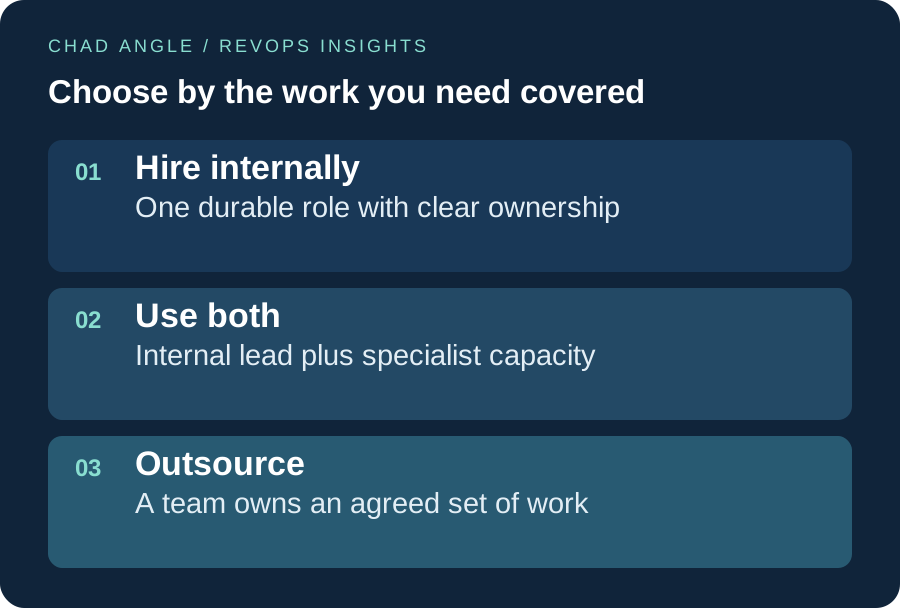
- Hire internallyOne durable role with clear ownership
- Use bothInternal lead plus specialist capacity
- OutsourceA team owns an agreed set of work
Start with a list of recurring work
List who owns lead routing, CRM changes, pipeline reporting, attribution, forecasting support, and the handoff after a sale. Mark the tasks that routinely wait. A job description that mixes several specialties can hide a staffing problem behind a single title.
Compare the models on the same scope
An internal hire can work well when the scope is stable and the company can cover technical or analytical gaps elsewhere. Fractional help fits a team that already has an owner but needs help with specific work. An outsourced team fits broader coverage when the company can agree on decision rights, systems access, and handoffs.
An example from a growing B2B team
Imagine one RevOps lead spends Monday reconciling reports and Tuesday clearing a CRM backlog. Marketing still cannot trace leads to revenue. Keep the lead responsible for priorities and bring in support for the reporting and systems work. Agree on what the partner owns and how the internal lead approves changes.
What should go into the scope?
Define owners, recurring deliverables, response expectations, access, and who maintains the work if the engagement ends. Compare total cost using the same work list, including management time and coverage during absences. Ask who will be responsible when a handoff fails.