Revenue Operations Insights
Why Your CRM Is Live but Your Sales Forecast Is Still Unreliable
A CRM can show a close date and deal value without showing whether the buyer is ready to proceed. Forecast reliability improves when teams agree on stage criteria, capture evidence of buyer progress, and review forecast changes against actual results.
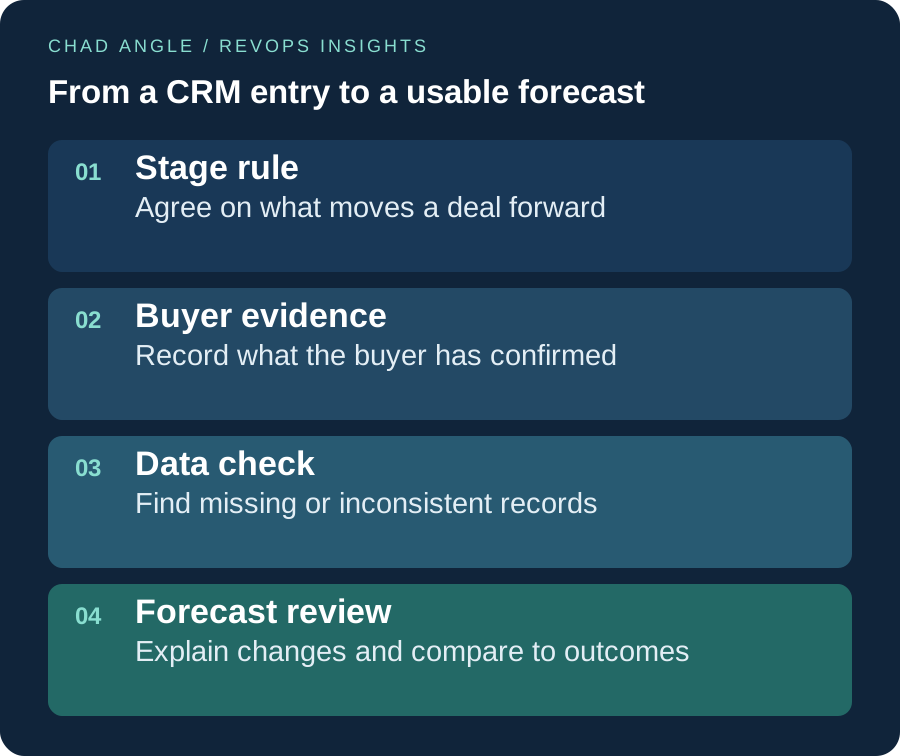
- Stage ruleAgree on what moves a deal forward
- Buyer evidenceRecord what the buyer has confirmed
- Data checkFind missing or inconsistent records
- Forecast reviewExplain changes and compare to outcomes
Check the meaning of a stage
Ask two managers what it takes to move an opportunity into proposal. If one means that a quote was sent and the other means that the buyer reviewed it and agreed on a decision path, the same stage will represent different levels of risk.
Look at changes over time
Start with deals that moved out of the current period. Ask what changed, when the team knew, and whether the CRM captured it. Review the original forecast alongside what actually closed. That gives you a way to see whether stage criteria or judgment need work.
Make one change you can verify
Pick a stage with frequent slippage and document the buyer evidence that supports it. Update the CRM fields and manager review around that evidence. Compare push rates and forecast error over subsequent periods using the same definitions. Record the date of the change so later comparisons make sense.
Where automation helps
Once the team agrees on the rules, the CRM can prompt sellers for the right information or flag deals without a next step. A dashboard or AI assistant can help surface patterns. The people running the forecast still need to agree on what the information means and when to act on it.